Market Overview:
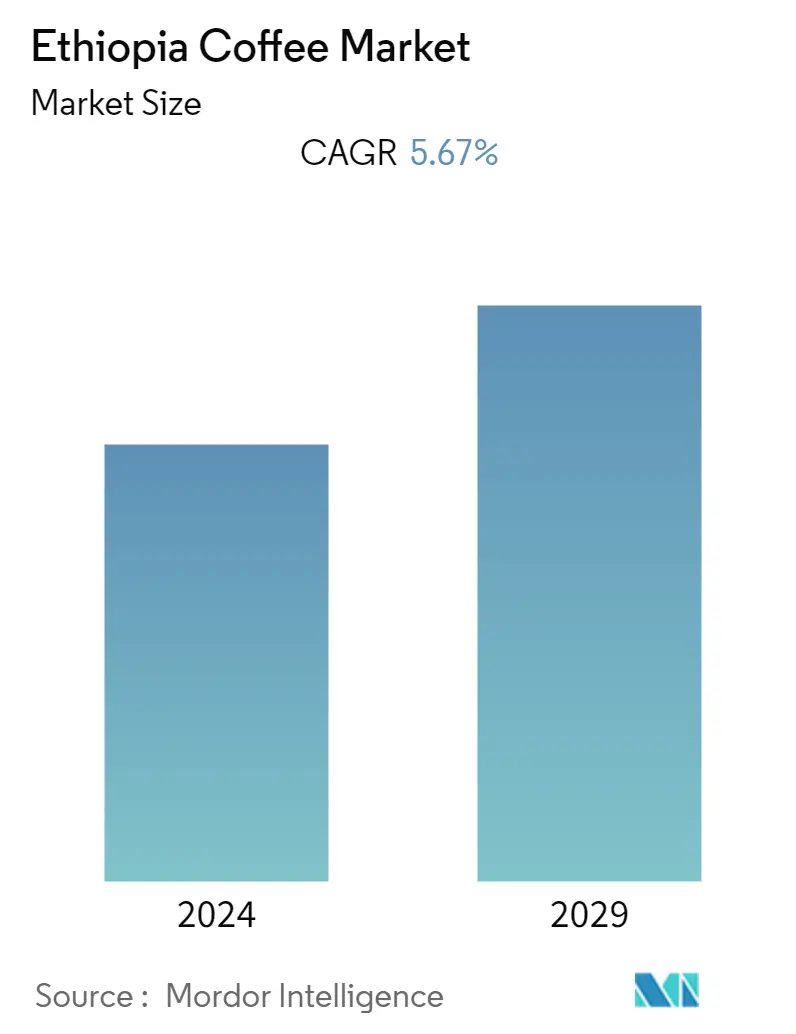
Ethiopia, often referred to as the birthplace of coffee, holds a significant place in the global coffee market. The rich history, unique coffee varieties, and traditional cultivation practices continue to shape the Ethiopian coffee industry, making it one of the most renowned and sought-after in the world. With a growing demand for specialty coffee, The Ethiopia Coffee Market is experiencing a compound annual growth rate (CAGR) of 5.67% during the forecast period (2024-2029).

Key Trends:
-
Historical Significance of Ethiopian Coffee:
- Ethiopia’s coffee culture dates back centuries and is deeply embedded in the daily lives of the population.
- The legend of Kaldi and the discovery of coffee beans has become synonymous with Ethiopian heritage.
-
Key Coffee Growing Regions in Ethiopia:
- Highlight the major coffee-producing regions such as Sidama, Yirgacheffe, and Harar, each known for their distinctive coffee profiles.
- Discuss how the elevation, climate, and soil in these regions contribute to the flavor and quality of the beans.
-
Ethiopian Coffee Varieties:
- The uniqueness of Ethiopian coffee lies in its diverse varieties, such as heirloom beans.
- Emphasize the growing demand for Ethiopia’s single-origin coffees in global specialty markets.
-
Economic Importance of Coffee to Ethiopia:
- Coffee is the backbone of Ethiopia’s economy, contributing to a significant portion of its export revenues.
- Explore the livelihood of coffee farmers and how they are crucial to the supply chain.
-
Global Demand for Ethiopian Coffee:
- The rise in global demand for premium, ethically sourced coffee has put Ethiopian coffee in the spotlight.
- Ethiopia’s strong presence in the specialty coffee market, bolstered by growing consumer interest in unique and organic products.
-
Challenges Facing the Ethiopian Coffee Industry:
- Discuss issues such as climate change, fluctuating prices, and infrastructural challenges that affect coffee production.
- The role of the Ethiopia Commodity Exchange (ECX) and government policies in addressing these challenges.
-
Sustainability and Fair Trade Practices:
- Growing emphasis on sustainability and fair trade in the global coffee market.
- Highlight initiatives to ensure better pricing for farmers and efforts toward environmentally-friendly farming practices.
-
The Future of Ethiopian Coffee:
- The increasing adoption of modern farming techniques and certifications (organic, fair-trade) to boost international competitiveness.
- Expansion opportunities in emerging markets as coffee consumption continues to rise worldwide.
Conclusion:
Ethiopia’s coffee industry is not only a source of pride for the nation but also a vital economic sector with immense global significance. As consumer preferences shift towards high-quality, ethically sourced coffee, Ethiopia stands to benefit. However, the country must continue to navigate challenges related to climate change and infrastructure.
You can also find the related reports below:
To Know More: https://www.mordorintelligence.com/industry-reports/ethiopia-coffee-market